
Local energy control for complex EV charging environments. The Voltic EMS runs on Voltic Edge, an on-site controller that manages power distribution across charging stations, building loads, energy storage, and the grid — in real time.
EV charging introduces high, unpredictable electrical loads. Without proper energy and power management, this leads to:
Voltic EMS addresses these challenges by continuously monitoring power and energy flow and actively controlling how it is distributed — based on real-time data and system history.
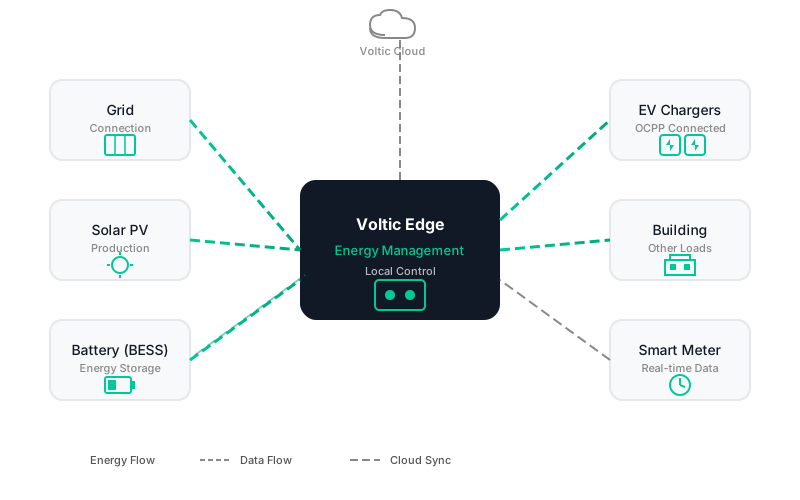
Voltic EMS orchestrates all energy assets at your site
Many EV charging platforms rely entirely on cloud logic. This approach has fundamental limitations in safety-critical environments.
Voltic EMS runs locally on Voltic Edge, which enables:
The cloud remains essential for monitoring, analytics, billing, and reporting — but energy decisions must be made locally.
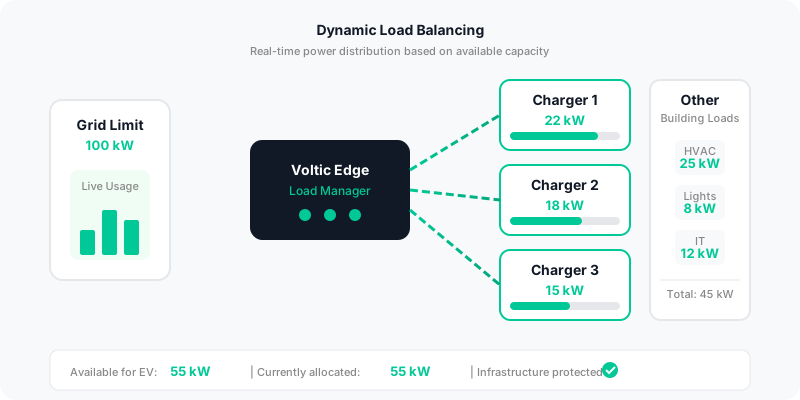
Dynamic load balancing in action
Voltic EMS orchestrates energy flow across all relevant assets at a site.
AC and DC charging stations managed through OCPP protocol.
Integrated control for peak shaving and load shifting.
Maximize renewable energy usage for EV charging.
Respect grid constraints and optimize grid usage.
By understanding the entire electrical topology, the system ensures that all components operate safely within defined limits.
Load Management ensures electrical power is distributed safely and predictably across EV charging infrastructure while respecting all physical constraints of the electrical system.
What it is: A predefined method of distributing available electrical power among EV charging stations using fixed electrical limits. Each charging station, or group of charging stations, is assigned a constant maximum current or power value.
When to use it:
What it is: Extends static load balancing by continuously adjusting available charging power based on live measurements of other electrical loads. The system integrates with smart meters or building management systems to monitor real-time consumption.
When to use it:
What it is: Optimizes power distribution across multiple electrical infrastructure layers — from individual chargers to site and building-level limits. Models the full power supply topology including grid connection point, building-level breakers, sub-distribution panels, and individual sites or zones.
When to use it:
Load Management in Voltic EMS is designed to remain safe and deterministic even when data sources or devices become unavailable. Typical fallback scenarios include:
See how Voltic EMS dynamically distributes power based on solar production, building consumption, and EV charging demand.
Power Optimization defines how available electrical power is allocated between active EV charging sessions once all electrical constraints are satisfied. It operates within the boundaries defined by Load Management.
Available charging power is shared evenly among all active sessions. Perfect for public charging sites prioritizing fairness.
Higher-priority sessions receive power first. Ideal for fleet depots and operationally critical vehicles.
Power distributed inversely proportional to energy already delivered. Balances energy delivery across vehicles.
Uses vehicle state-of-charge and departure time to optimize charging. Enables outcome-driven fleet charging.
Peak Shaving limits the maximum power drawn from the grid during periods of high demand. It operates above Load Management as a site-level control layer.
How it works:
When to use it:
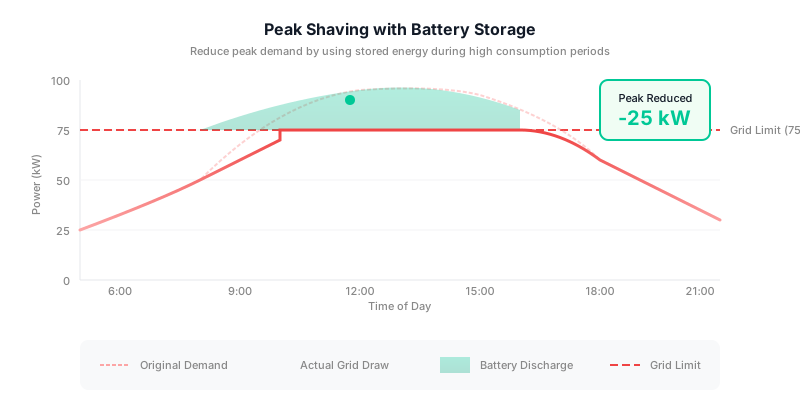
Peak shaving reduces grid demand using battery storage
While Peak Shaving controls how much power can be used at any moment, Load Shifting optimizes when energy is consumed.
Charging demand is shifted to periods when energy is:
When to use it:
Load Shifting makes EV charging smarter, cheaper, and greener by using energy when it's most available and affordable.
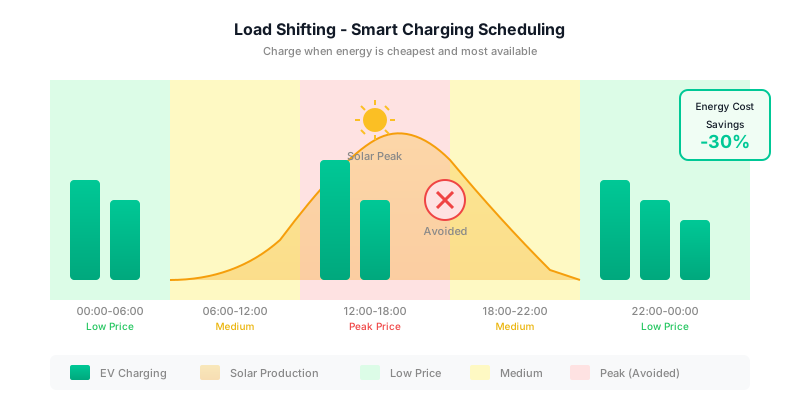
Charge when energy is cheapest and most available
Voltic uses a local-first architecture where all safety-critical energy decisions are executed on-site.
Runs within the electrical infrastructure. Controls load management, power optimization, and energy limits independently of cloud connectivity.
Provides monitoring, configuration, analytics, billing, and multi-site management. Enhances visibility but does not control energy logic.
Energy control logic executed locally only. Role-based access, secure authentication, and safe-state defaults on failures.
Voltic EMS scales EV charging safely, reliably, and cost-effectively.
Learn how Voltic Edge can help you scale charging without grid upgrades.